
- > List of Online Distributors
- > Contact
-
Site Search
Please enter a keyword
Site Search
Please enter a keyword

- Crystal Unit
- Crystal Oscillator
- Frequency Synthesizer
- Signal Generator
- Millimeter-Wave Converter
- Synthetic Quartz Crystal
- Optical Component
- QCM Outgas Analysis System
- QCM Real-Time Process Monitor
- SAW Devices (Manufactured by NDK SAW devices Co., Ltd.)
-
Space
-
Infrastructure / Industrial Equipment
-
Automotive
-
Mobile
-
AV / OA, Medical, Healthcare, Household Appliance
-
Search from Connectivity Standards
Product Search
- Table of Contents
-
Growth of the AI Data Center Market
The rapid advancement of artificial intelligence (AI) is driving the deployment of large-scale GPU clusters*1 in AI data centers.
In AI systems where thousands or even tens of thousands of GPUs work together, high-speed communication alone is not enough. Highly accurate synchronization across the entire system is also essential.
These systems require not only low jitter and low noise, but also tight frequency tolerance and stable operation at high temperatures.
Specifically:
- Higher-density, higher-speed GPU servers
- Support for 800G/1.6T-class high-speed networks
- Improved synchronization and timing accuracy across the entire system
These are among the key requirements that must be addressed.
High-precision crystal devices, which generate accurate and stable clock signals, are key components supporting these requirements.
*1 A configuration in which multiple GPUs (Graphics Processing Units) are connected over a high-speed network and operate as a single large-scale computing system.
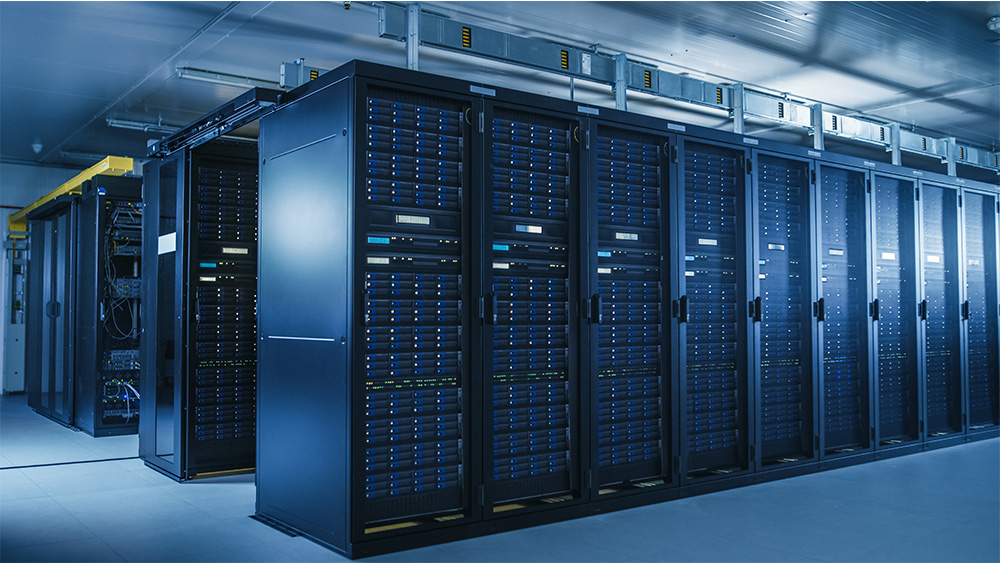
High-Precision Crystal Devices for High-Speed, High-Capacity AI Server Communications
AI servers equipped with large numbers of GPUs are rapidly becoming more powerful and densely integrated in AI data centers.
Within AI servers, GPUs are interconnected through high-speed links, exchanging vast amounts of data in real time. Server-to-server connectivity is also evolving from 400G to 800G, with 1.6T-class networks on the horizon.
Because multiple high-speed devices must operate in concert, system-wide synchronization accuracy has a major impact on processing performance and communication quality.
Clock quality is especially critical in high-speed signal processing. Low phase jitter, low phase noise, and precise timing control are therefore essential.
In practice, AI servers are required to deliver the following:
- Support for high-speed, high-capacity communications
- Low-latency, high-precision synchronization for GPU-to-GPU communication
- Low phase jitter and low phase noise
- Compact components for high-density integration
- High reliability for continuous 24/7 operation
High-precision timing devices play a vital role in optical transceivers, time cards, network interface cards (NICs), accelerator cards, and other components essential to AI servers.
Through its high-precision crystal devices, NDK supports high-speed, high-capacity communications and stable operation in AI servers.
AI Server Architecture Overview
Depending on system scale, an AI data center may house thousands or even tens of thousands of AI servers (GPU servers).
NDK crystal devices play an important role in a wide range of components, including optical transceiver modules essential for AI-server communications, as well as time cards, network interface cards (NICs), and accelerator cards within AI servers.

Solutions for AI Servers
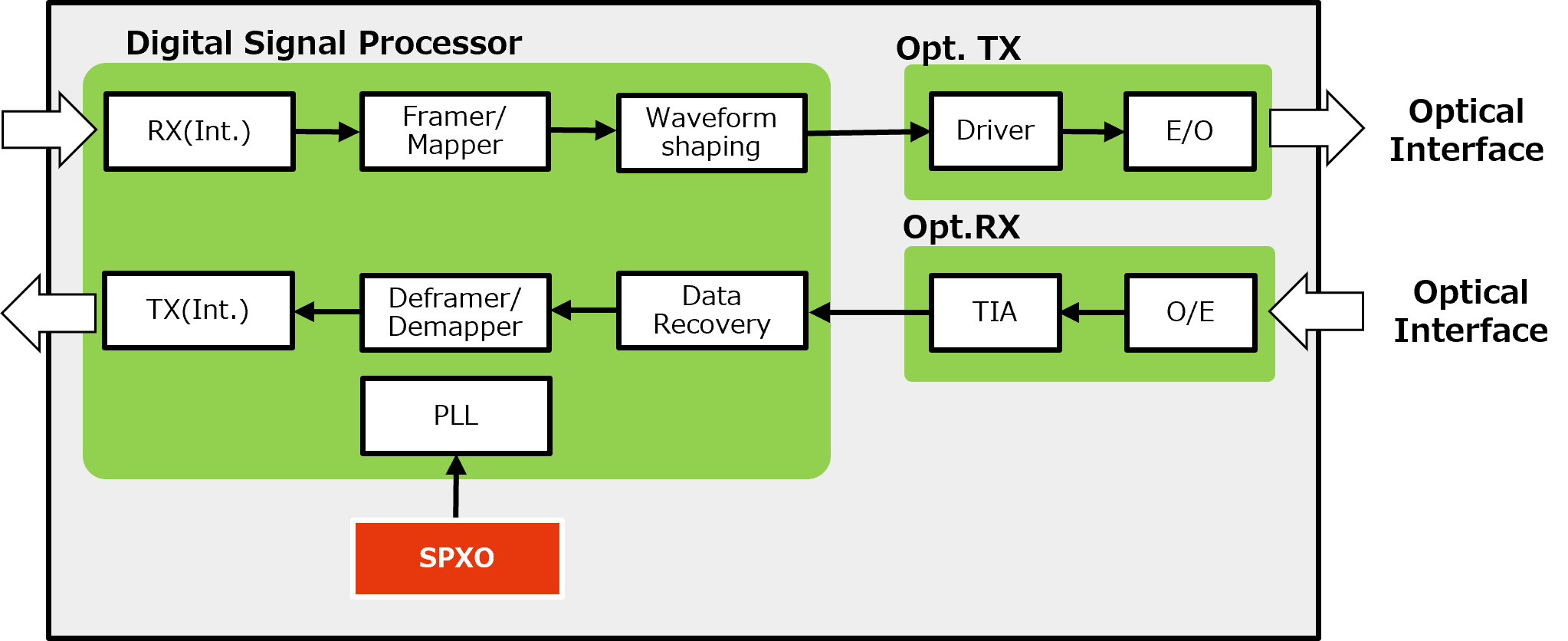
Optical Transceiver
An optical transceiver is a communication module that converts electrical signals into optical signals and vice versa.
By converting electrical signals from an AI server into optical signals and then converting them back into electrical signals at the receiving end, optical transceivers enable fast and stable data transmission.
High-speed optical communications demand low phase jitter, high-frequency operation and compact components. In some applications, frequency accuracy in the ±20 ppm range is also required.
NDK provides high-quality clock solutions that deliver the low phase jitter and precise frequency control required for high-speed optical communications.
Block Diagram
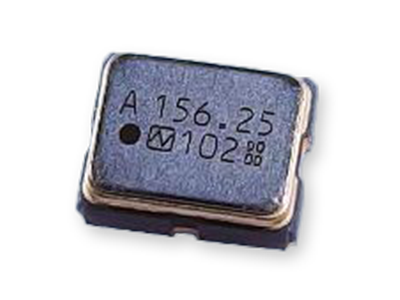
Recommended Products
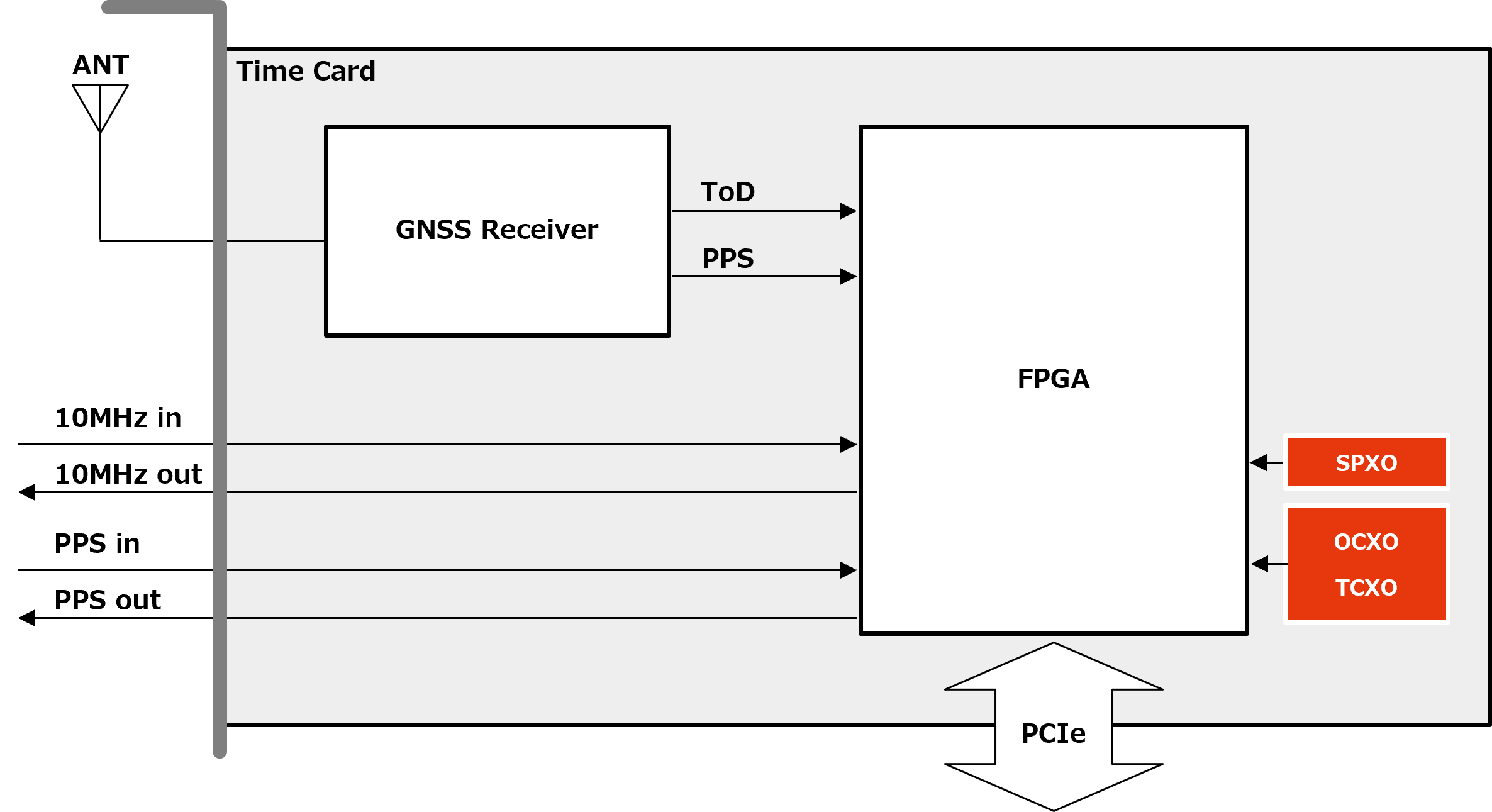
Time Card
A time card provides precise time synchronization for servers and network equipment.
In AI data centers, large numbers of servers and network equipment operate together, making precise time synchronization across the entire system essential.
Short-term stability and frequency stability over temperature are therefore critical. NDK clock solutions support these high-precision synchronization systems.
Block Diagram
Recommended Products
Network Interface Card (NIC)
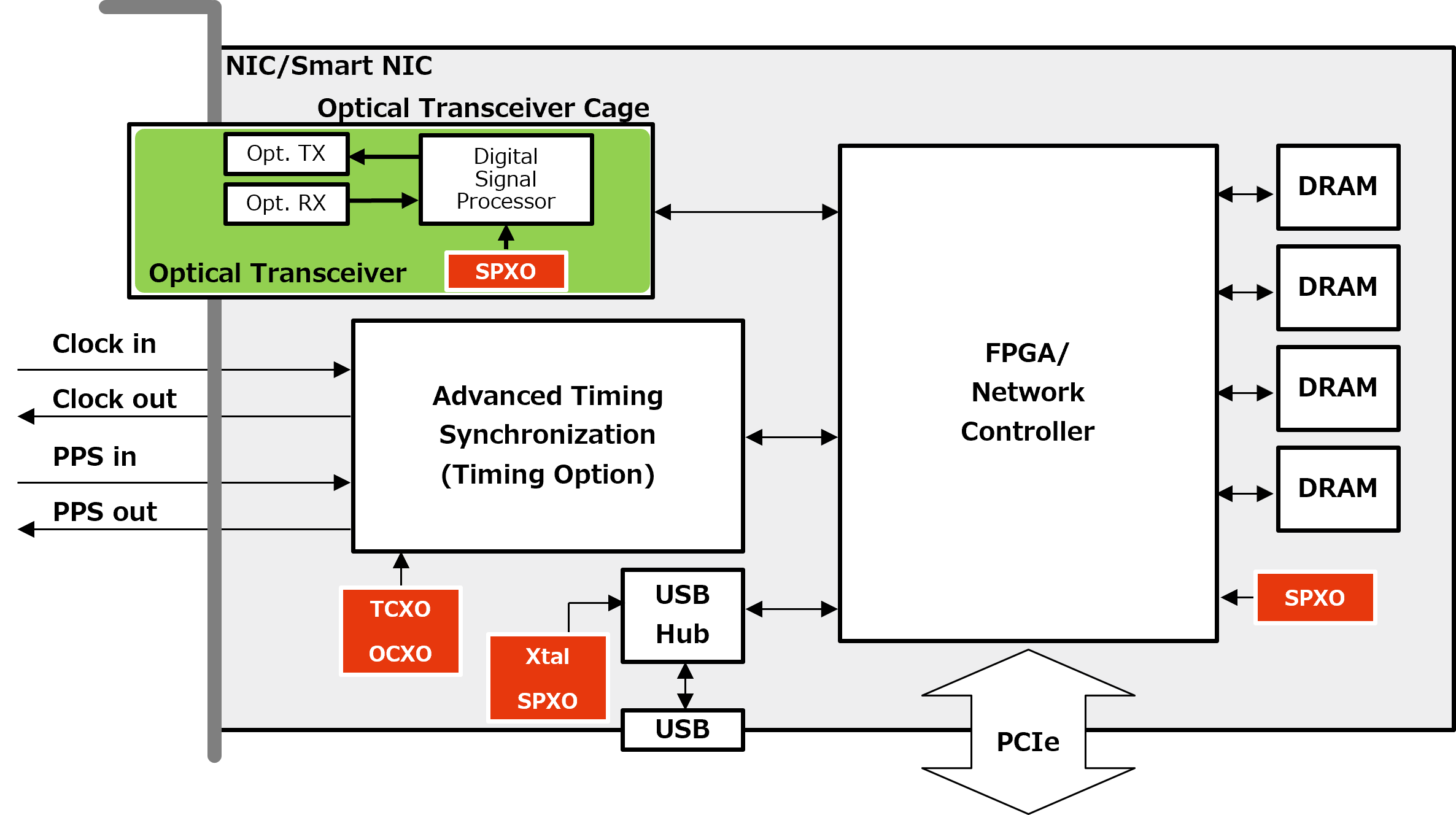
A network interface card (NIC) is a key device that connects a server to a network.
In AI data centers, NICs play a crucial role in transferring large volumes of data between servers at high speed. This requires high-frequency operation and low phase jitter.
With these characteristics, NDK crystal devices support high-speed and stable data communications.
Block Diagram
Recommended Products
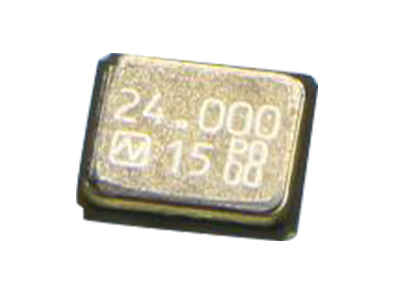
Accelerator Card
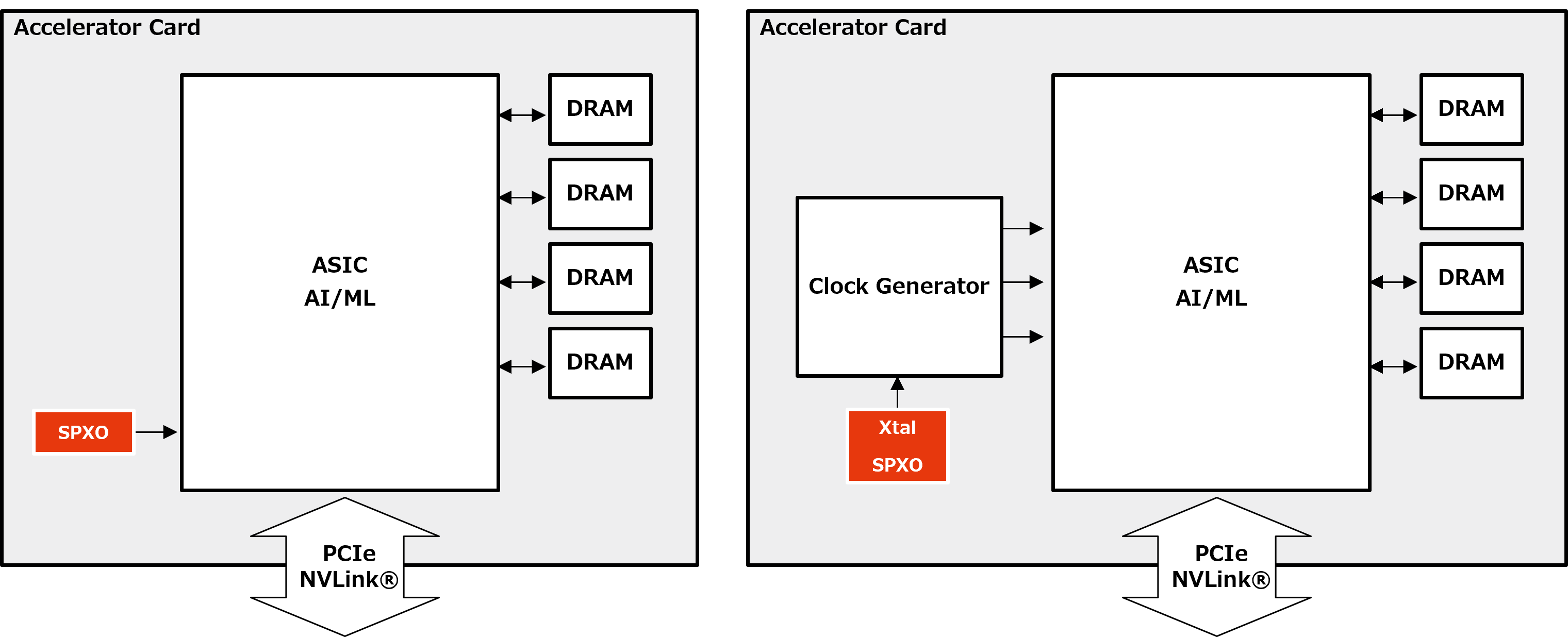
An accelerator card is a computing board designed to accelerate AI training, inference, and large language model (LLM) workloads.
Low jitter and compact size are essential for delivering consistently high computing performance. NDK crystal devices meet these requirements and support stable, high-speed processing in AI systems.
Block Diagram
Recommended Products
Why Choose NDK Products
High-Quality Signals with Low Phase Jitter and Phase Noise
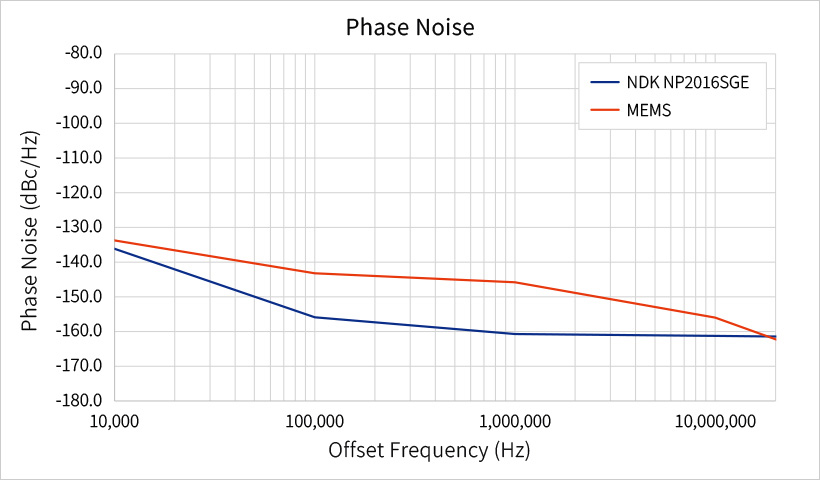
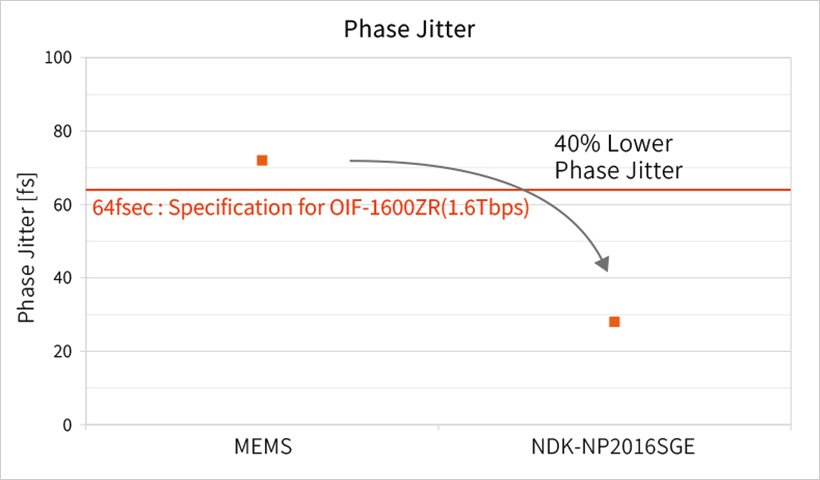
【 Phase Noise and Phase Jitter Comparison: NDK Crystal Oscillators vs. MEMS Devices 】
NDK crystal devices have a proven track record in demanding automotive and telecommunications base-station applications, where performance under temperature fluctuations, vibration and noise, as well as long-term stability, is essential.
Crystal devices can generate high-frequency signals without a phase-locked loop (PLL), helping to achieve lower phase jitter and phase noise than MEMS devices. This enables high-quality clock solutions for high-speed communications.
High-Reliability Operation at Temperatures up to +125°C
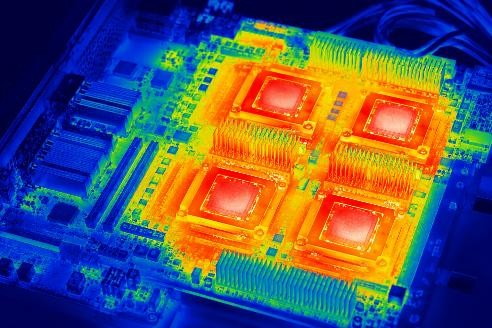
* Image shown is for illustrative purposes only.
As GPUs become more powerful and server designs more densely integrated, heat generation inside AI data center servers continues to rise. As a result, timing devices that can operate reliably and maintain stable performance in high-temperature environments are increasingly important.
NDK offers a broad lineup of crystal devices rated for operation at temperatures up to +125°C, delivering stable clock signals even in high-temperature environments.
NDK crystal devices also have a strong track record in automotive applications such as advanced driver-assistance systems (ADAS), which demand reliability under severe temperature conditions. NDK applies the high-reliability technologies developed for the automotive market to support reliable 24/7 operation of AI servers and high-speed communication equipment.
Photolithography Technology Enables Smaller Size and Higher Frequencies
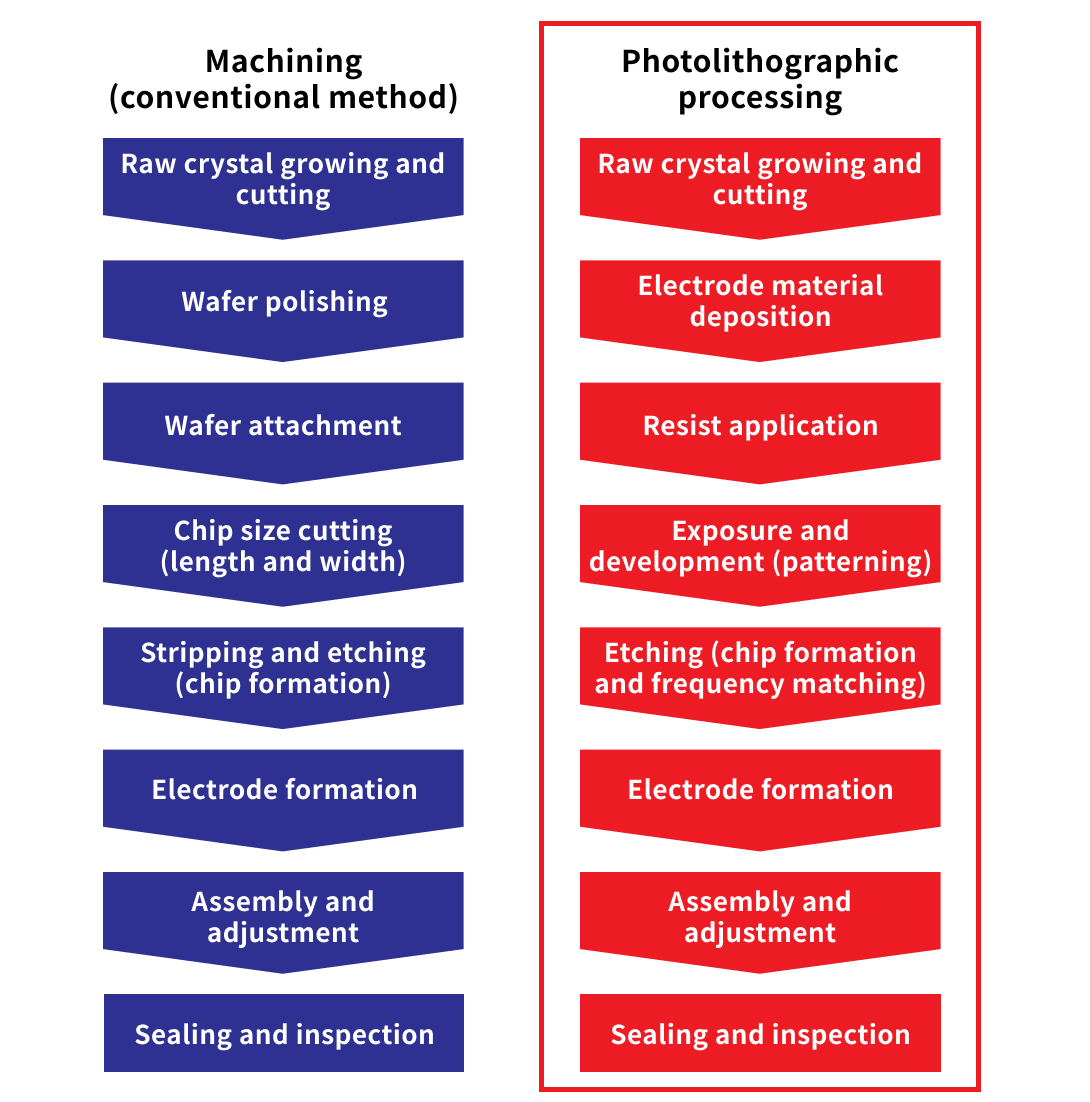
Comparison of Crystal Device Production Technologies
4-inch wafer
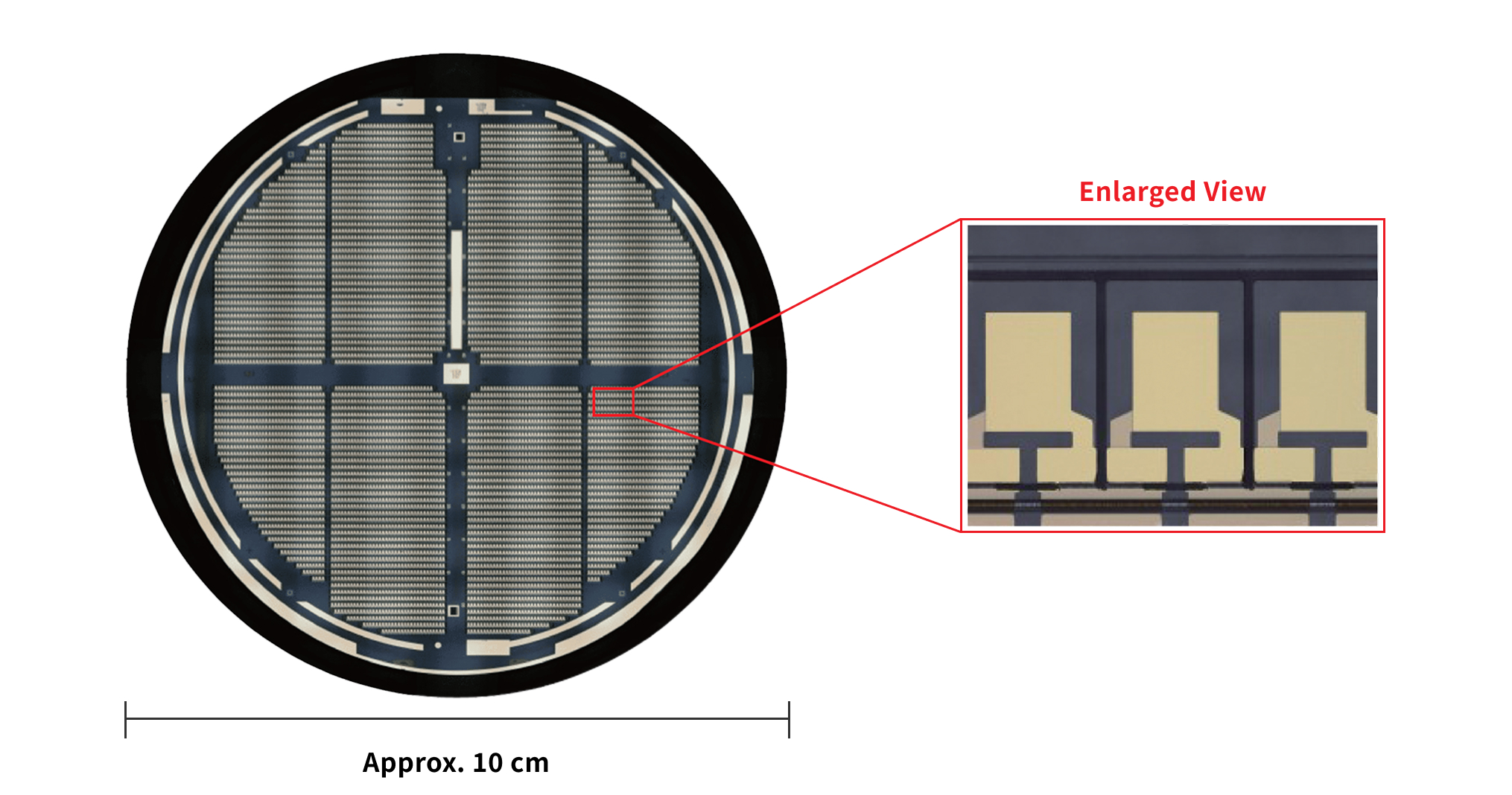
To support miniaturization and higher frequencies, NDK applies photolithographic processing derived from semiconductor manufacturing. By processing synthetic quartz with high precision, NDK achieves fine, uniform structures that are difficult to produce using conventional machining. This technology enables both miniaturization and high-frequency performance.
Technical Support for High-Speed Communication and Precision Timing Design

Stable oscillation requires careful matching between the crystal unit or crystal oscillator and the circuit.
NDK evaluates oscillation performance under each customer's circuit conditions and recommends the optimal combination of the circuit and crystal device.
Through evaluations and qualifications conducted with various IC manufacturers, NDK also provides reference information, including circuit diagrams and evaluation data for NDK crystal devices.
NDK provides comprehensive support for the precision timing design in AI servers and high-speed communication equipment.
Need Help Selecting Products for AI Data Centers?
NDK provides technical support in selecting crystal devices for AI servers and high-speed communication equipment.
- Product selection support
- Oscillation evaluation support
- Technical documentation requests
- Sample requests
For these and other technical inquiries, please contact us using the link below.

 Contact NDK About Products for AI Servers